
ADA SignsCompliant to the 1/32″.
Braille and tactile signage built to the 2010 ADA Standards — restrooms, room IDs, stairwells, elevators, wayfinding. Ten design series, 48 colors, and a 10-year manufacturing warranty behind every sign.
A Standard, Not a Style Choice
Most signs are a design decision. An ADA sign is a federal specification with numbers in it. The 2010 ADA Standards for Accessible Design don’t say “make it easy to read” — they say how far the letters stand off the background, what kind of braille, how high off the floor, and which side of the door. Get one of those wrong and you have an expensive sign that doesn’t comply.
So here are the numbers, because almost nobody publishes them. Tactile characters must be raised at least 1/32″ off the background, uppercase, in a sans-serif face — no script, no italics, nothing decorative. Grade 2 braille goes below the text, with rounded domes, not flat printed dots. The finish has to be non-glare, with characters contrasting light-on-dark or dark-on-light. Pictograms need a clear field of at least 6″ in height, with any text placed below it rather than inside it.
Then there’s the one that trips up nearly every building we see: mounting. The sign goes 48″ to 60″ above the finished floor — 48″ minimum to the baseline of the lowest tactile character, 60″ maximum to the highest. And it goes on the latch side of the door, not the door itself, with an 18″ × 18″ clear floor space outside the swing. Put a beautiful compliant sign on the door and somebody reading braille gets hit with it when it opens. That’s not a technicality — that’s the entire point.
This matters more here than most places. Panama City Beach is wall-to-wall public accommodation — condo towers, hotels, vacation rentals, restaurants on Front Beach Road, clinics, offices from Lynn Haven to 30A. Nearly every one of them is covered by the ADA, and Florida sees more accessibility litigation than almost any state in the country. Signage is the first thing anyone checks, because you can measure it from the hallway with a tape. Add the rebuilding that’s still going on around Bay County and the Tyndall corridor, and there are a lot of brand-new interiors that need a full sign package before they open the doors.
Some of those signs live outside, too: a pool gate, an exterior stairwell, a building entrance facing the afternoon sun. Tell us which signs go outdoors and we’ll spec them for Gulf Coast sun, salt air, and humidity instead of an interior-only plaque.
Let’s be plain about how we work: we supply, we don’t install. We’ll spec your package, tell you exactly which sign goes where and at what height, get it built, and hand it over — your contractor or maintenance crew mounts it. No permitting, no ladders, no install crew. If you need a turnkey install, we’ll say so up front rather than waste your time.
What you get instead is range and backing. Ten design series — Alma, Bridge, Bay, Haven, Leland, Marshall, Valley, Houghton, Frosted, and Crystal Ice — across 48 pre-colored matte substrates. Compliant doesn’t have to mean institutional: a frosted acrylic plaque in a boutique hotel or a brushed-aluminum look in a clinic meets exactly the same standard as the plain grey one. Every sign is built by our manufacturing partner and carries a 10-year manufacturing warranty.
Plan the calendar honestly. Ask for a quote four to six weeks out. Once the sign list is approved, CAD proofs come back within 72 business hours; after you approve the artwork, production runs two to three weeks, longer for special materials or finishes. Working toward a certificate of occupancy or an opening date? Call early — signage is the thing everybody remembers last and the inspector notices first. Need the layout designed? That’s our in-house studio.
Every Sign the Building Needs
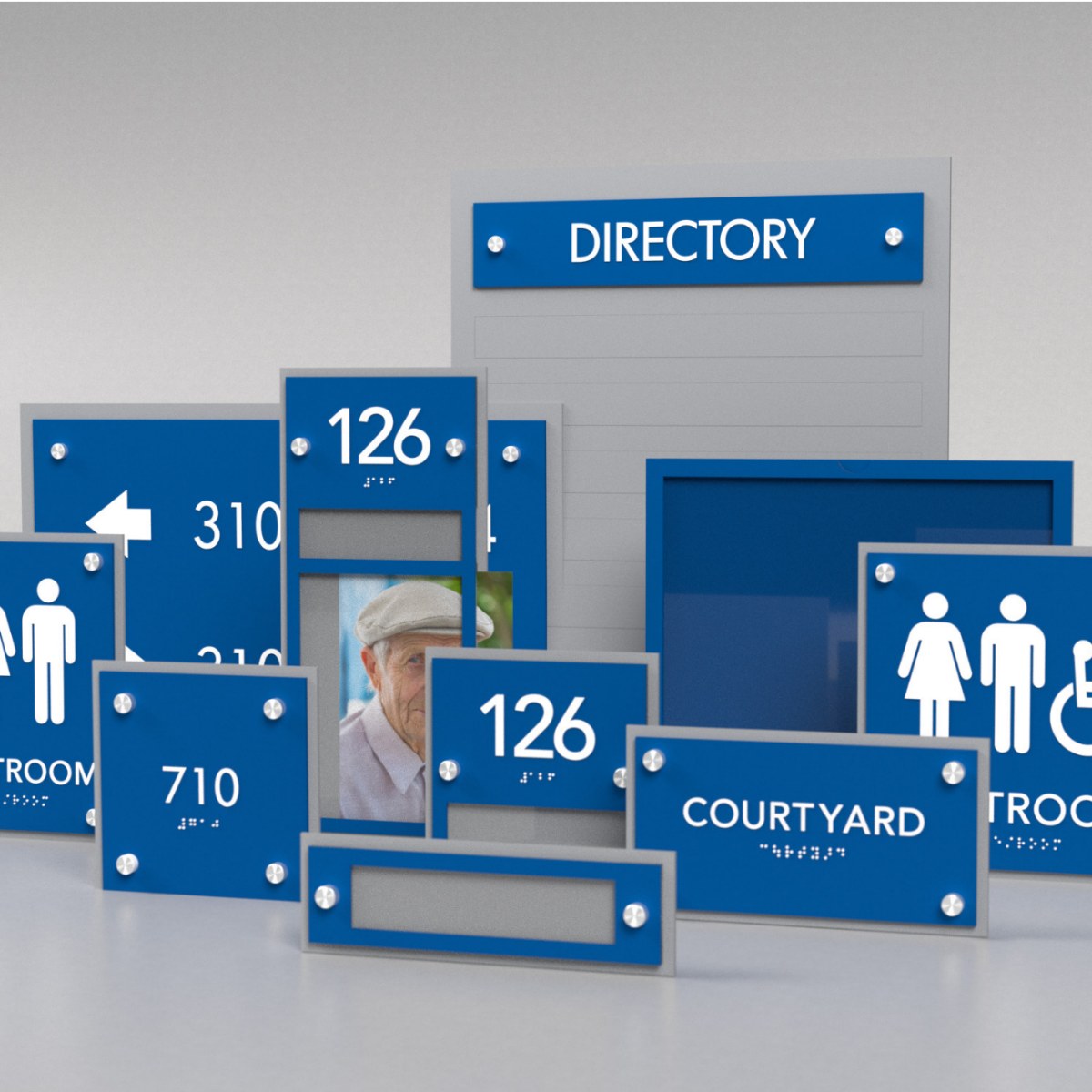
Restroom ID
The one everybody checks first. Pictogram, tactile text, braille — men’s, women’s, unisex, and accessible, 6×8 up to 8.5×8.5.
Room ID & Numbers
Offices, mechanical, electrical closets, guest rooms. Available with window inserts for names that change, or photo inserts for memory care.
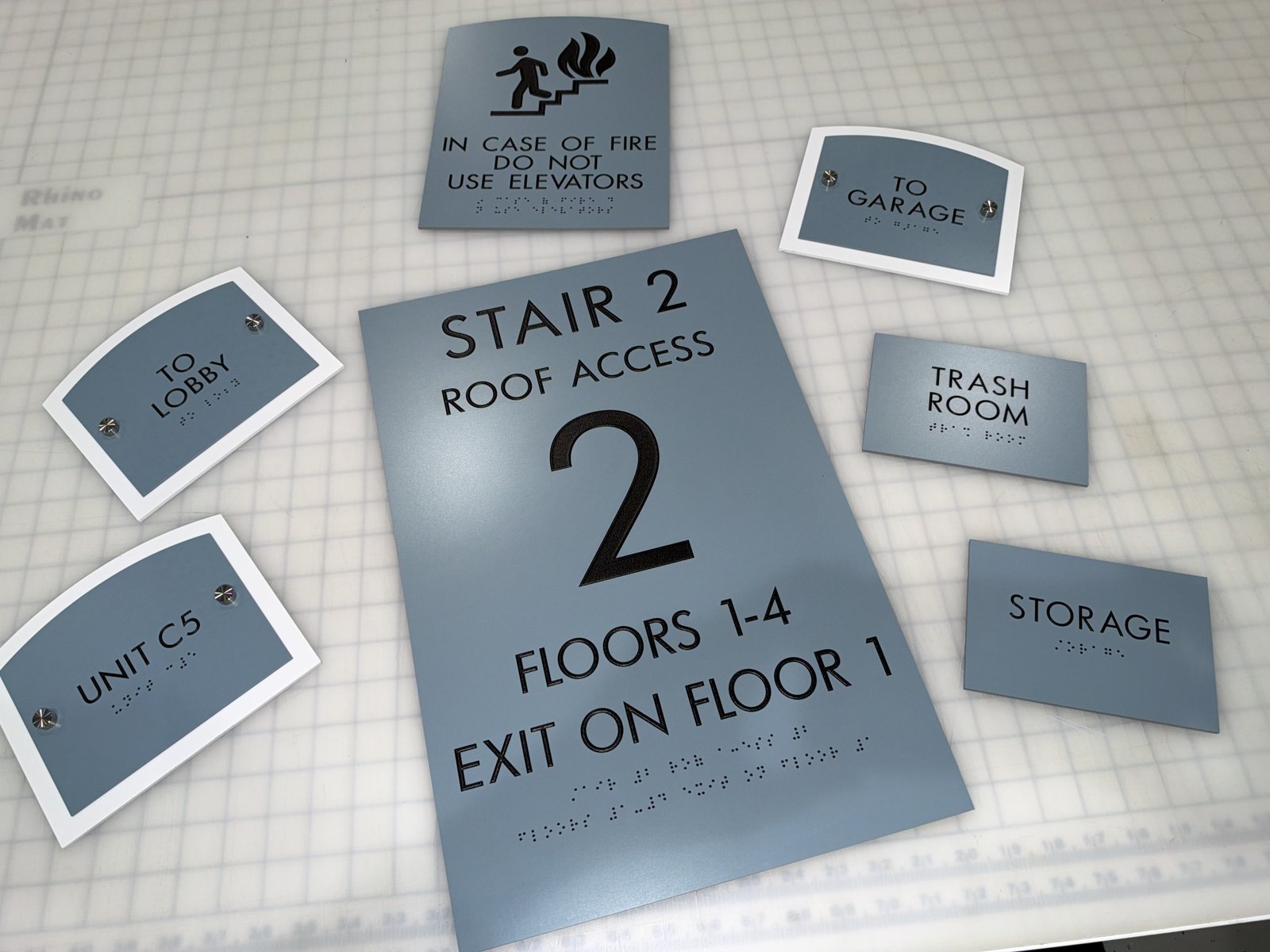
Stairwell & Elevator
Floor level, roof access, exit routes — plus 4×4 elevator door jamb plates. Life-safety signage inspectors look for specifically.
Directional & Directory
Arrows and room ranges for corridors, plus directories up to 17×17 with changeable strips as tenants move.
Fire & Evacuation
“In Case of Fire Do Not Use Elevators” plaques and evac-plan holders that take a printed floor plan behind a clear face.
Name Plates & Sliders
Cubicle plates with paper inserts you swap yourself, and slider signs that flip between vacant and occupied.
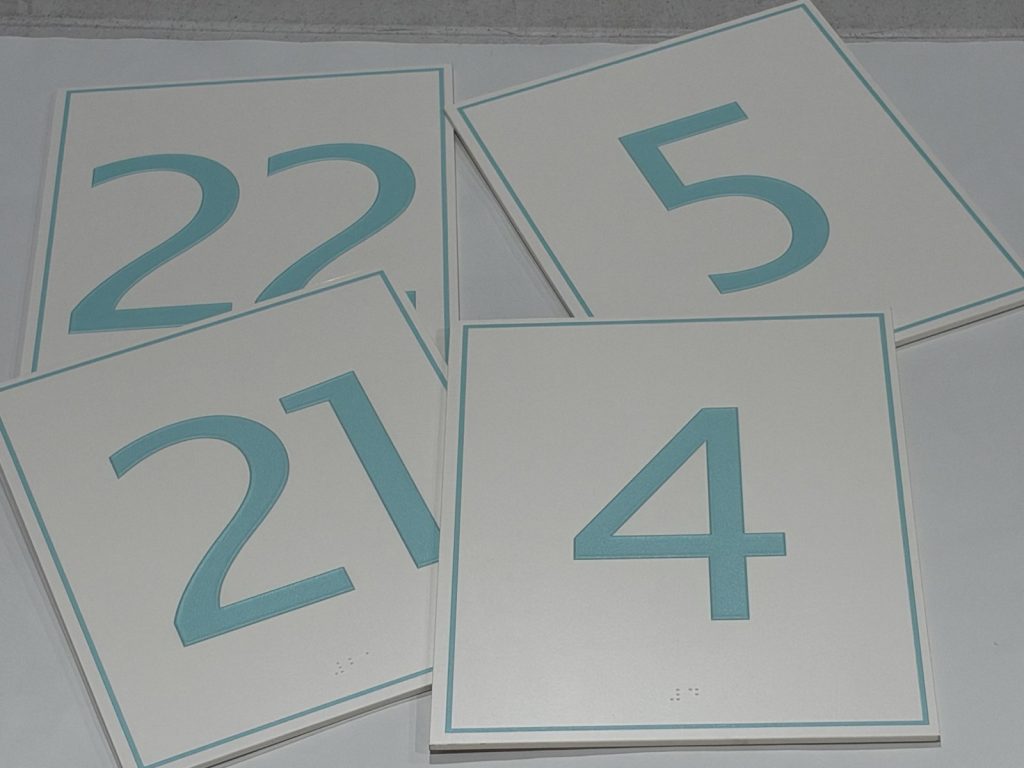
Three Ways Signs Fail Inspection
Almost every non-compliant sign we’re asked to replace fails on one of these three. None of them are hard — they’re just specific.
1. It Has to Be Felt
Characters raised 1/32″ minimum, uppercase, sans-serif. Grade 2 braille below the text in rounded domes. Printed dots and engraved-in letters are not compliant, no matter how good they look.
2. It Has to Be Reachable
48″–60″ above the finished floor, on the latch side of the door — never on the door. With 18″ × 18″ of clear floor outside the swing. This is the one buildings miss most.
3. It Has to Be Seen
Non-glare finish, characters contrasting light-on-dark or dark-on-light. Pictograms get a clear 6″ field with text below it. A glossy sign under a downlight is unreadable and non-compliant.
Series, Substrate & Schedule
- Series: ten — Alma, Bridge, Bay, Haven, Leland, Marshall, Valley, Houghton, Frosted, and Crystal Ice
- Substrate: 48 pre-colored options in a matte, non-glare finish built for high-traffic wear
- Tactile characters: raised 1/32″ minimum, uppercase, sans-serif, with Grade 2 braille below
- Mounting: 48″–60″ AFF on the latch side — we spec it, your crew installs it
- Sizes: from 4×4 elevator jamb plates to 17×17 directories, plus custom
- Warranty: 10-year manufacturing warranty on every sign
- Schedule: quote 4–6 weeks out; CAD proofs in 72 business hours; 2–3 weeks production after approval
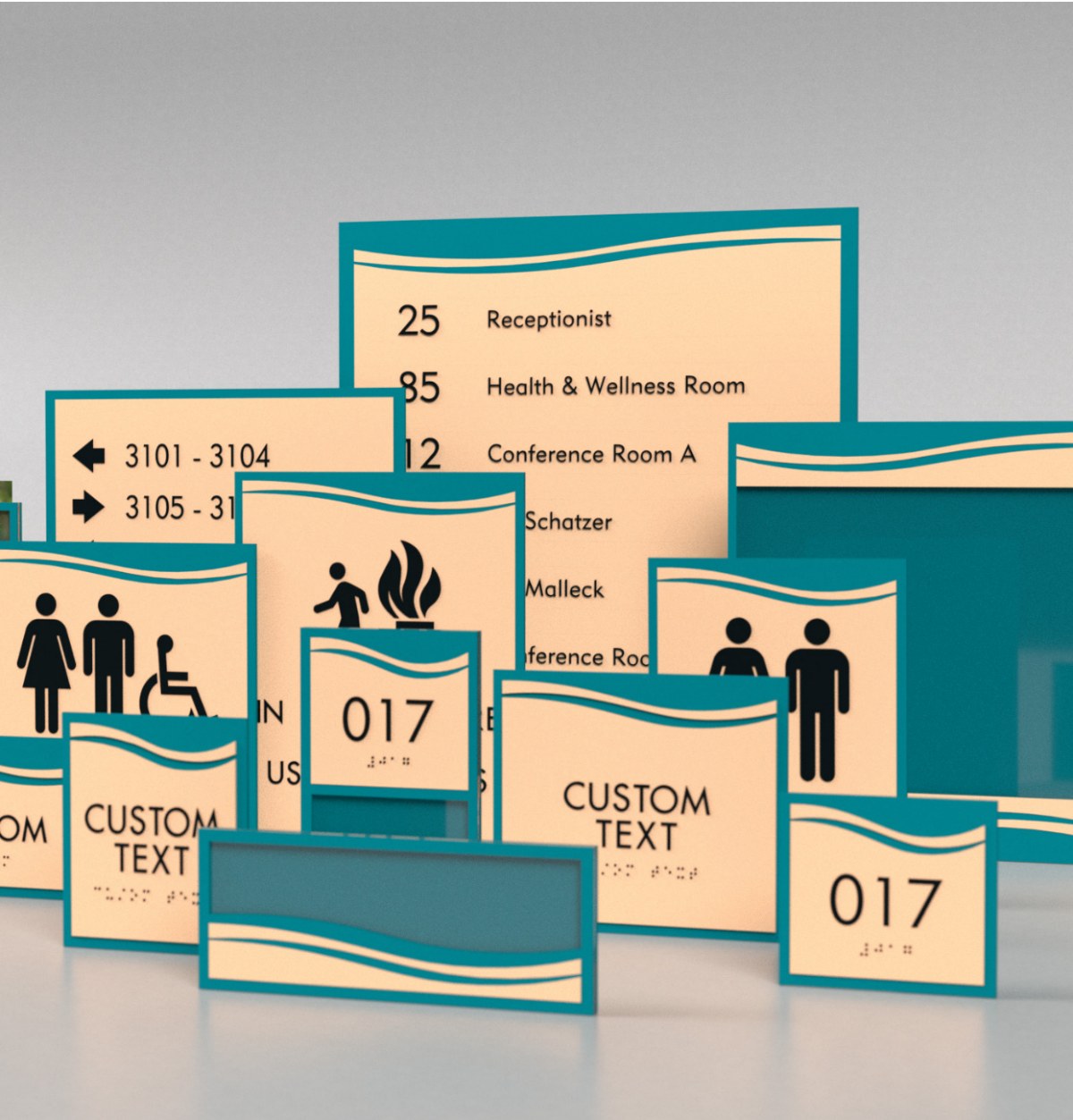
Ten Series, One Standard
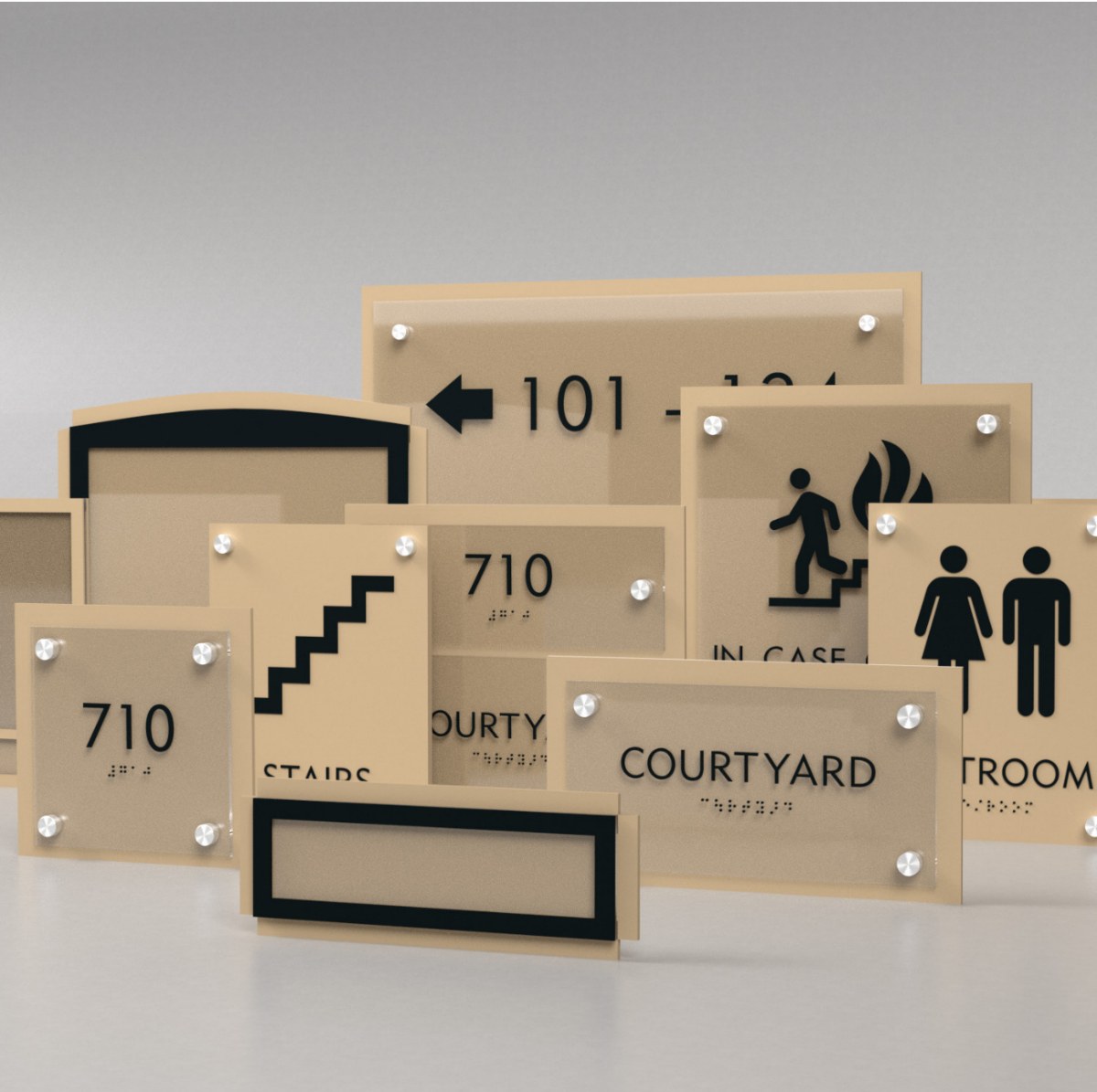
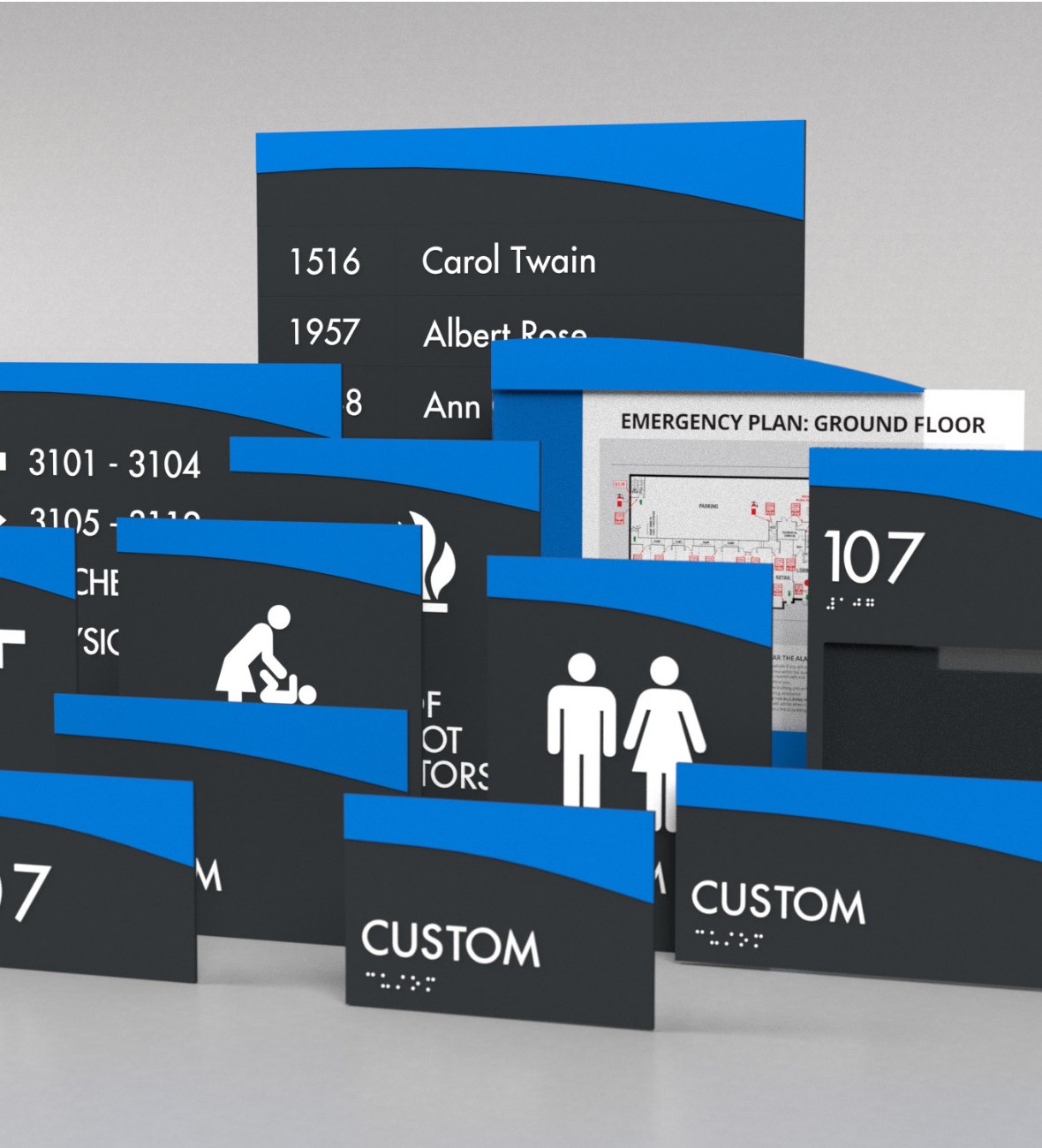
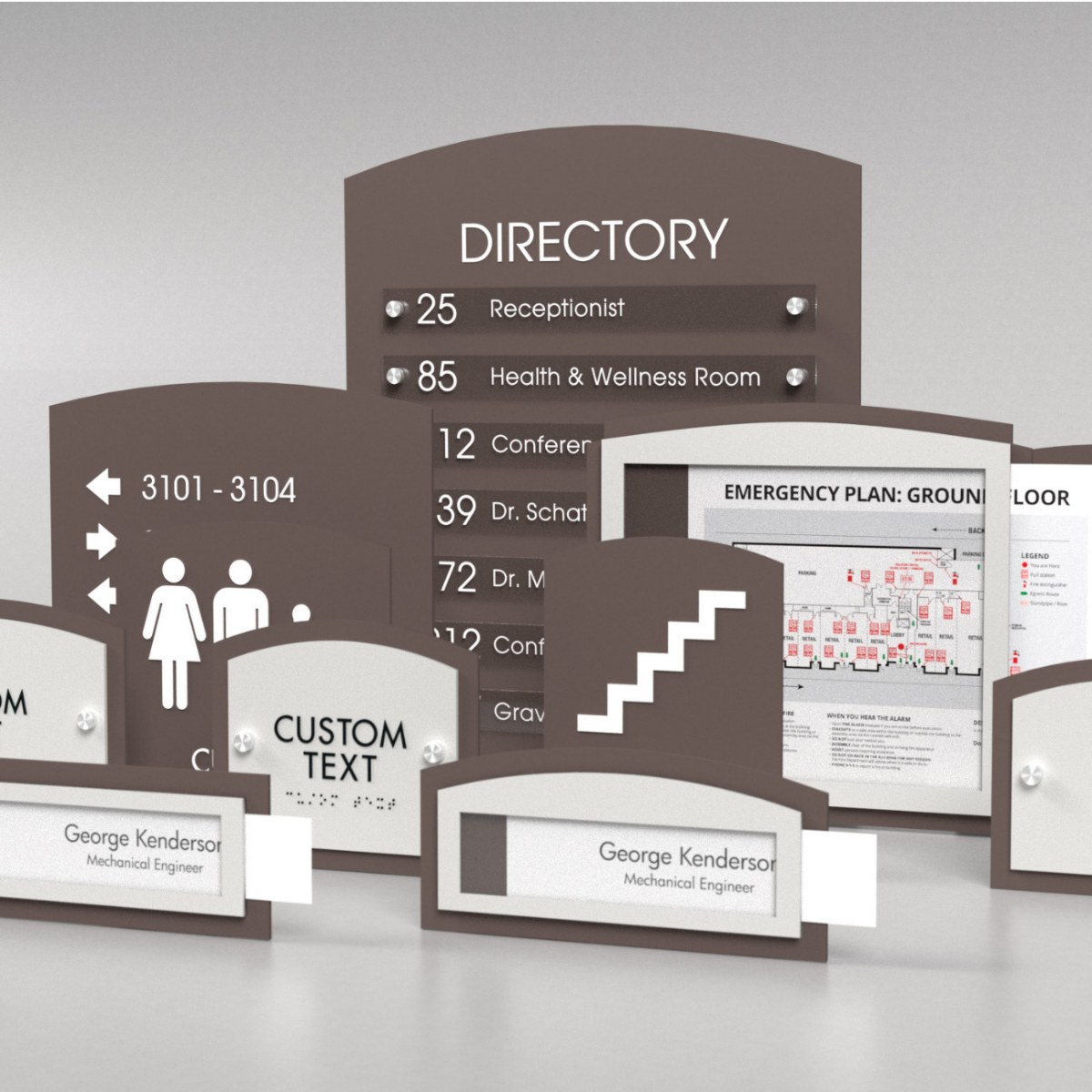
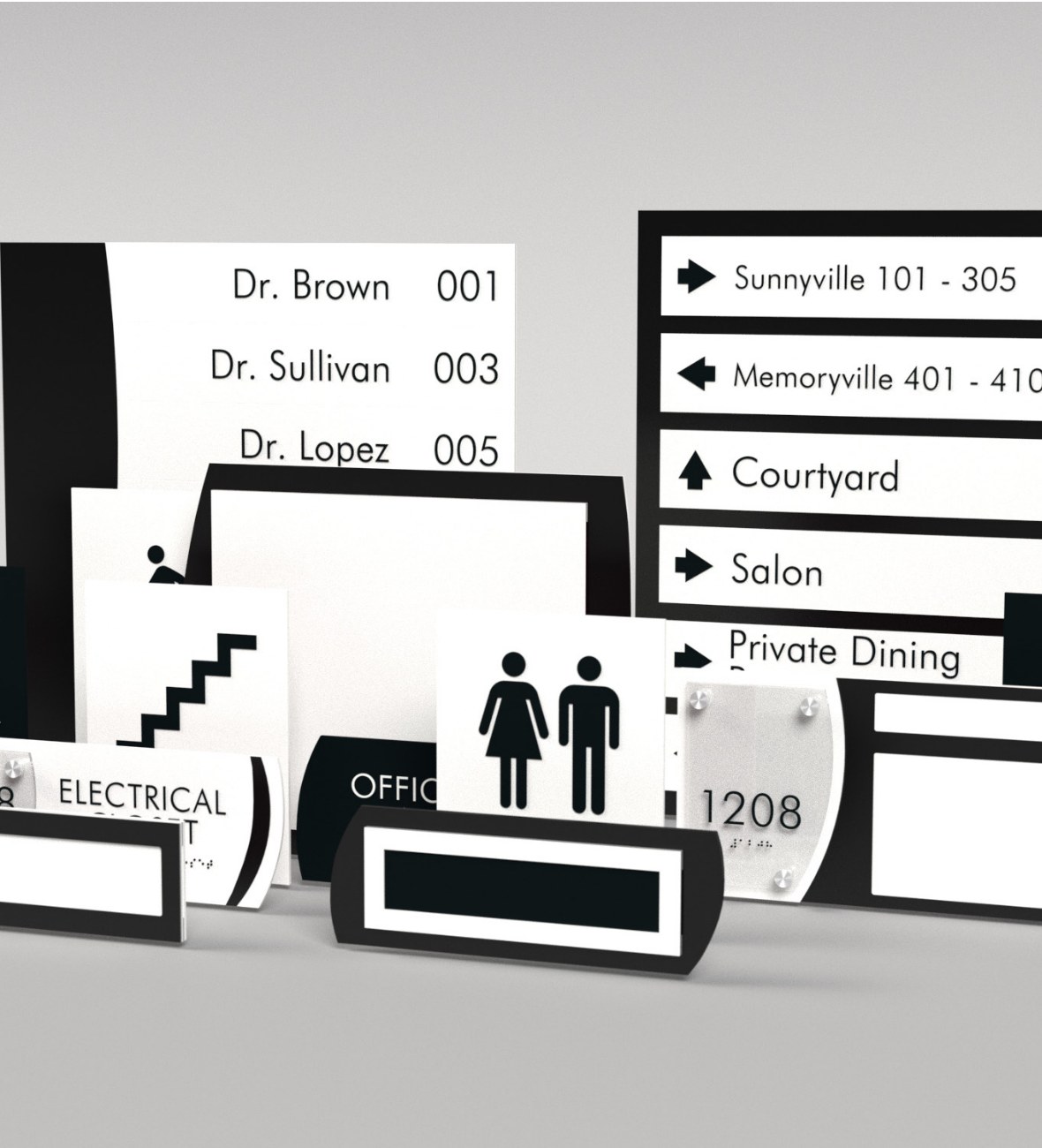
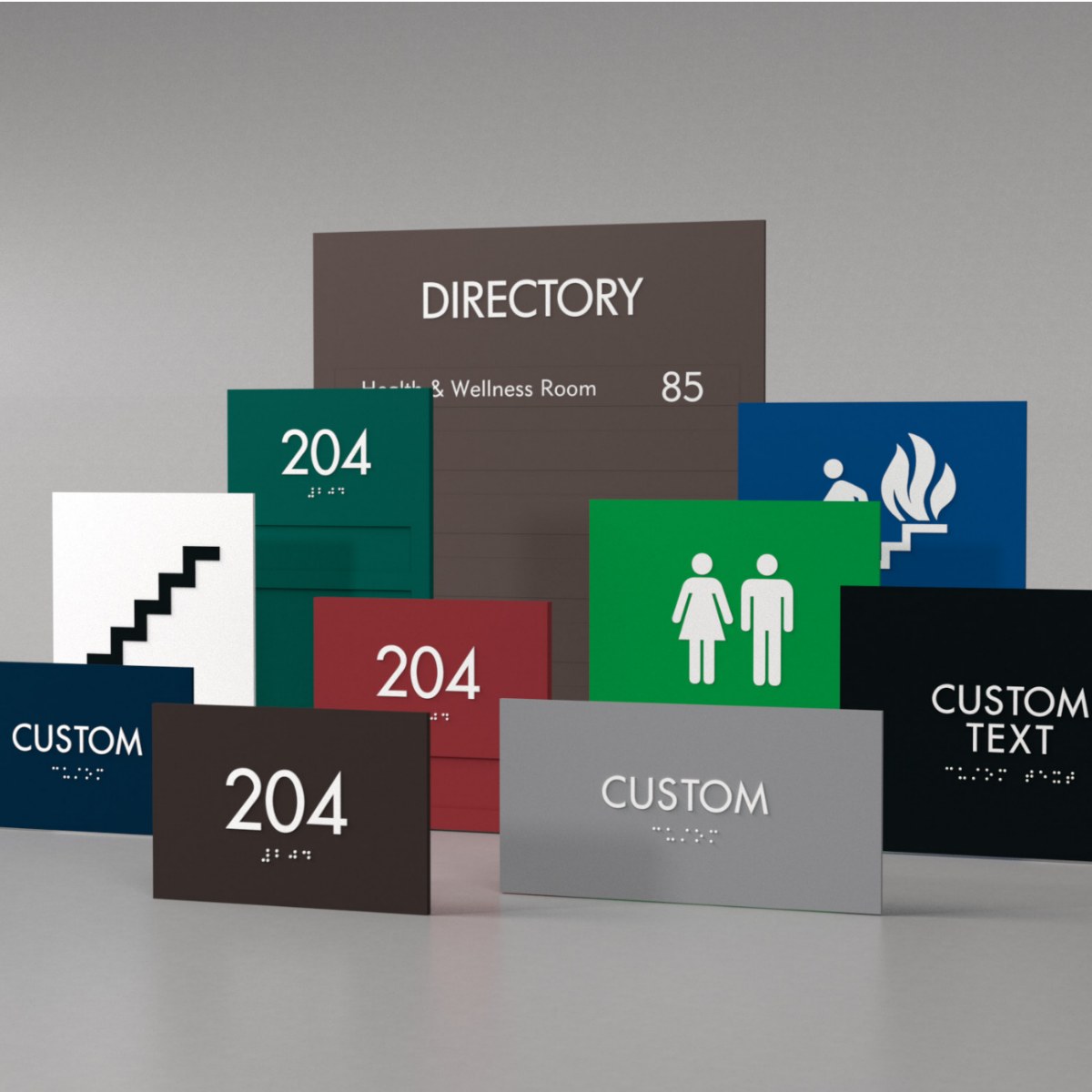
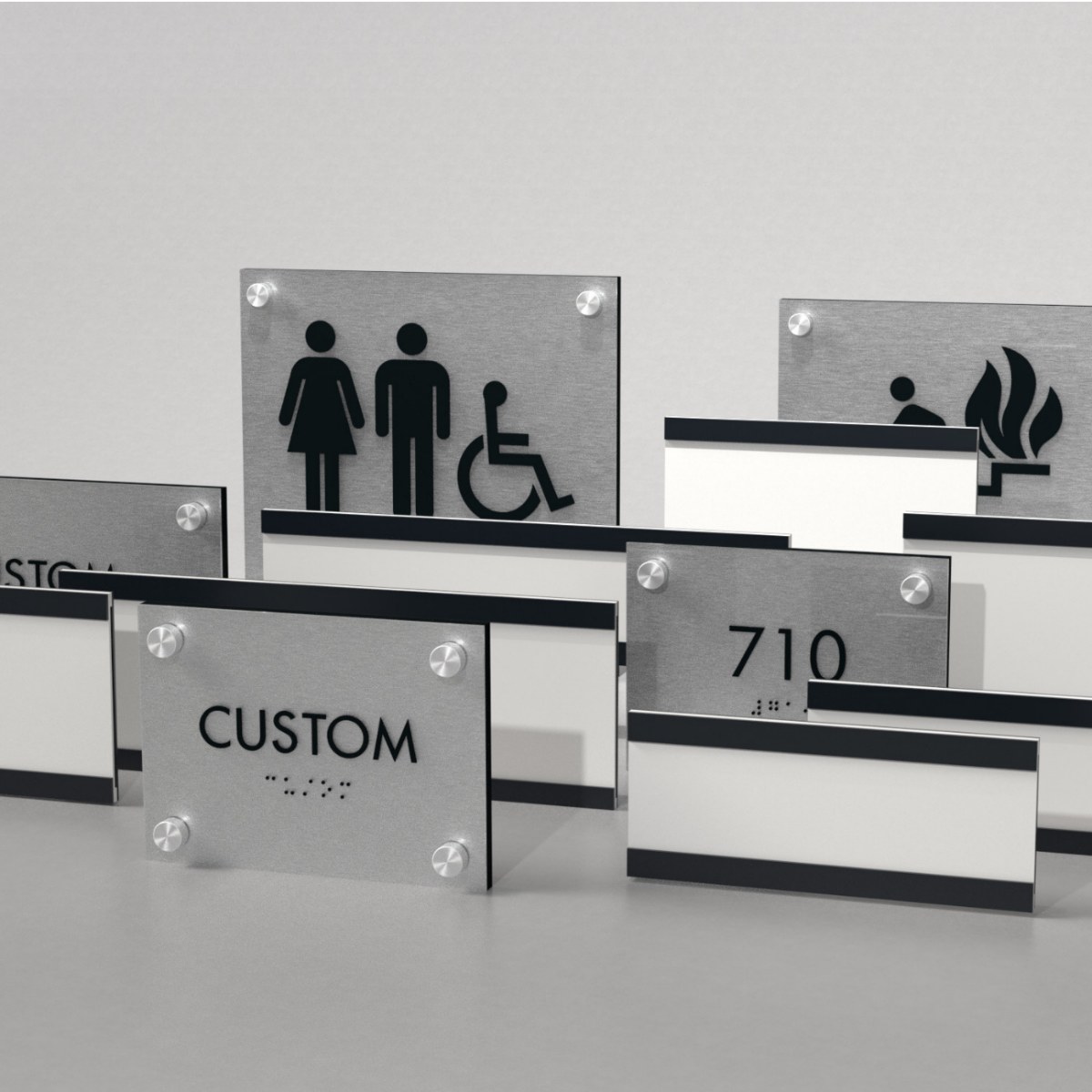
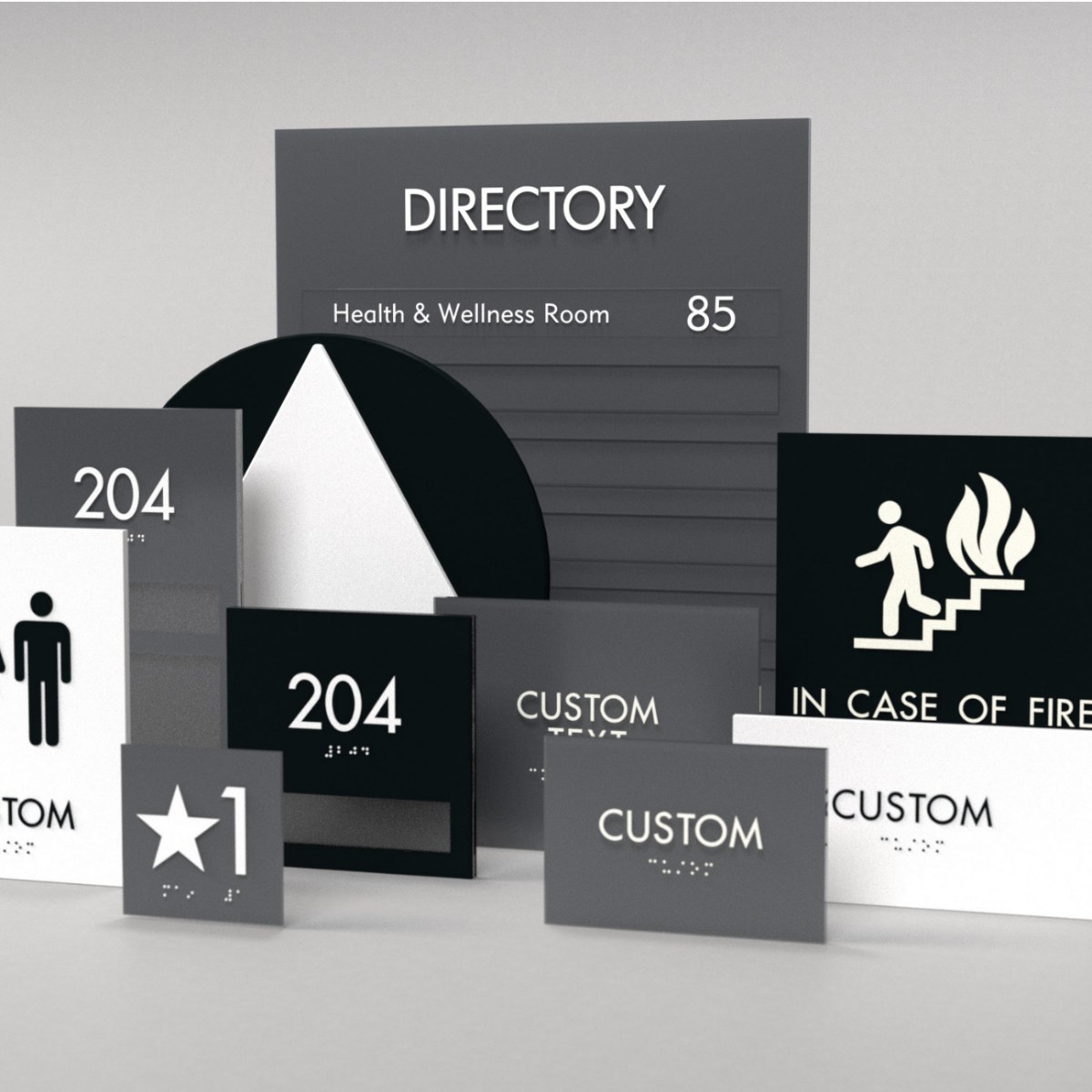
Every series meets the same federal spec — they just don’t look like it. Nine of the ten are below, and the Alma Series is pictured above. Come by the shop and put your hands on the samples.

The Rest of the Job
If you’re opening a space, ADA signage is one line on a long list. We can handle most of the rest of it too.
ADA Signage Questions, Answered
What makes a sign ADA compliant?
Four things: characters raised at least 1/32 inch off the background, Grade 2 braille positioned below the text, a non-glare finish with high contrast, and correct mounting height and location. Miss any one and the sign isn’t compliant.
How high does an ADA sign have to be mounted?
Between 48 and 60 inches above the finished floor — 48 inches minimum to the baseline of the lowest tactile character, 60 inches maximum to the baseline of the highest. That’s the number most people get wrong.
Which side of the door does an ADA sign go on?
The latch side, not the door itself. Someone reading braille shouldn’t have to stand where the door swings. You also need an 18 by 18 inch clear floor space at the sign, outside the door’s arc.
Do you install ADA signs?
No — we supply, we don’t install. We build your sign package to spec and hand it over; your contractor or maintenance crew mounts it. We’ll tell you exactly where each sign goes and at what height.
Which signs actually require braille?
Signs identifying permanent rooms and spaces — restrooms, stairwells, exits, room numbers. Directories, temporary signs, building addresses, and menus don’t require tactile characters or braille, though clear design still helps everyone.
How long does an ADA sign order take?
Request a quote four to six weeks before you need them. CAD proofs come back within 72 business hours of an approved sign list, then production runs two to three weeks after you approve the artwork.
What colors and styles do ADA signs come in?
Ten design series and 48 pre-colored substrates in a matte, non-glare finish. Compliant doesn’t mean institutional — a Frosted acrylic sign in a boutique hotel meets the same standard as a plain grey one.
Does my Panama City Beach business need ADA signs?
If the public comes in, almost certainly. Restaurants, hotels, condos, clinics, offices, and retail are all places of public accommodation under the ADA. Florida sees a lot of accessibility litigation, and signage is the easiest thing to check.
Where can I get ADA signs in Panama City Beach?
Right here at 2015 Wilkinson Ave. We spec your package, handle CAD proofs and approvals, and have it built by our manufacturing partner — backed by a 10-year manufacturing warranty.
Let’s Spec Your Signage.
Send us a floor plan or a room list and we’ll build the package — the right signs, the right sizes, and a mounting schedule your crew can follow. Serving Panama City Beach, 30A, and all of Bay County for over 20 years.
“Do not insult the deaf or cause the blind to stumble.”
Leviticus 19:14 NLT